University News Last updated 17 December 2025

Christmas in many homes means new toys, twinkling lights and musical cards, but inside many of them are button batteries that can cause significant harm to a person or pet and could kill in a matter of hours.
Birmingham City University's (BCU) Senior Lecturer Scott Colton and Associate Professor Dr Andy Powell are highlighting the dangers of ingesting button batteries during and after the festive period.
Button batteries, also known as coin batteries, power many everyday household items, including TV remotes, light-up books, decorations, scales and hearing aids.
Scott Colton, who specialises in emergency department nursing, describes the harm button batteries can cause: “If a child puts one in their nose, ears or swallows it, it can react with the mucus and cause severe damage and, unfortunately, even death.
“The number of children admitted to hospital for ingesting small objects has doubled in the last ten years.
“If you suspect that a button battery has been swallowed, it is essential that medical treatment is sought as soon as possible as these batteries can cause significant damage in a very short time.”
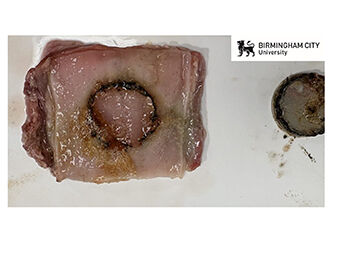
Dr Powell and Mr Colton produced a safety video demonstrating the damage caused by a common type of button battery in just two hours to a pig’s oesophagus tissue.
“The video time-lapse shows how quickly the damage occurs. We also show that batteries that are ‘dead’ can still cause significant damage,” Dr Powell said.
Mr Colton adds “The challenge is to recognise that a battery has been ingested as symptoms can be non-specific, which could include cough, nausea, vomiting, abdominal pain, irritability, drooling and bleeding and bloody stools.”
Battery safety recommendations:
- Keep batteries out of children’s reach
- Learn which devices and toys contain button batteries
- Dispose of old batteries quickly and safely
- If you suspect a battery has been swallowed, seek immediate medical help
“If you suspect someone has ingested a button battery, it is important to act fast and take them immediately to A&E at your local hospital or dial 999, telling them you think that they have swallowed a button battery,” Colton added.
“Make sure you have the battery packaging with you, as this can help the medical teams identify the battery type. Don’t let them eat or drink, and don’t make them vomit.”